Strength Meters - Force Meters: Accurate Measurements for Optimal Performance
Force meters are essential instruments that help measure the force exerted on an object or the body. They are indispensable in various sectors, such as sports, physiotherapy and industry. Accurately measuring strength is crucial for improving performance, tracking progress and preventing injuries.
Advantages of force meters
Strength meters offer numerous benefits that specifically meet the needs of athletes, therapists and professionals:
- Accuracy: These meters provide reliable and exact measurements, which is essential for determining strength progression.
- Targeted training: Strength measurements allow you to develop targeted training programs that are tailored to your specific goals.
- Preventing injuries: By properly monitoring strength and load, you can prevent overload and injuries.
- Feedback and motivation: Instant feedback on your strength performance can be motivating and help you stay focused on your training.
Applications of force meters
Power meters can be used in different situations:
- Sports training: Athletes use power meters to improve their performance and optimize their training programs.
- Physiotherapy: Therapists use strength meters to monitor patients' progress and create effective rehabilitation programs.
- Scientific Research: In science, force meters are often used for experiments and analyzes of muscle strength and function.
Types of force meters
There are several types of force gauges available, each with unique features and applications:
Hand force meters
These portable meters are ideal for measuring hand strength and grip. They are often easy to use and suitable for both professional and home use.
Dynamometers
Dynamometers are more advanced devices that can perform a wide range of force measurements. They are often used in clinical and sports settings for more detailed analyses.
Power plates
Force plates are platforms that measure the force exerted during various movements, such as jumping or walking. They are ideal for sports analysis and biomechanical research.
How to use force meters?
Here are some practical tips for using a force gauge:
- Follow the instructions: Read the instructions carefully to ensure correct measurement.
- Make sure you have a correct posture: When measuring strength, it is important to have a good posture to get accurate results.
- Be consistent: Take measurements under similar conditions (e.g. time of day and equipment) to compare results.
- Calibrate regularly: Regularly check that the force meter is properly calibrated for the most reliable results.
Common mistakes
- Using incorrect posture: This can affect the measurements and not reflect the true force.
- Applying too much or too little force: Make sure you measure force consistently.
- Forgetting to calibrate: This can lead to inaccurate measurements, so always check before use.
Product range and selection aid
At FysioSupplies you will find an extensive range of force meters, from simple hand force meters to advanced dynamometers and force plates.
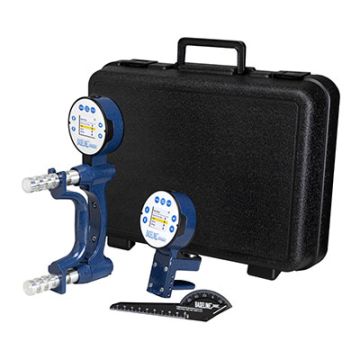
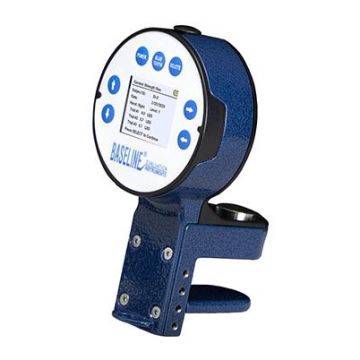
Baseline Power Meters
Baseline offers a comprehensive range of products for measuring muscle strength, range of motion and other body parameters. An example is the Hydraulic Hand Dynamometer, which accurately measures how much force is delivered by the hand without movement of the handle. Baseline's wrist forearm dynamometer also measures the strength of the wrist and forearm, with results can be read both analogue and digitally.
Hand Dynamometers and Pinch Meters
In addition to Baseline, FysioSupplies offers hand dynamometers and pinch meters from brands such as FS and Jamar. The MicroFET2 Wireless from Hoggan is a particularly popular model. It is a cost-effective, ergonomically designed hand force dynamometer that works wirelessly. This meter accurately measures muscle strength and is perfect for objective measurements of muscle groups, both for therapy and training.
Frequently Asked Questions about Force Gauges
What is a force meter?
A strength meter is used to reliably and objectively record muscle strength. There are different types of strength meters, such as hand dynamometers and pinch meters, that are specifically aimed at certain muscle groups. They are often used by physiotherapists and doctors to diagnose and monitor muscle strength.
What do you use a force meter for?
Strength meters help healthcare professionals determine where muscle strength is lacking in the body. These measurements support the preparation of rehabilitation plans and training schedules, with exercises aimed at strengthening weak muscle groups.
Which power meter is best to buy?
Popular models such as the MicroFET2 Wireless and the Activforce 2 Digital Dynamometer are widely used in physiotherapy practices. These models provide reliable, wireless measurements and can perform both strength and range of motion tests, making it easier to monitor patient progress.
What is the measuring range of a force meter?
The measuring range varies per force meter. This is the range within which measurements remain reliable and is usually stated in the instructions for use. This accuracy is essential for consistent and reliable results.
How do you measure something with a force meter?
The strength meter must be applied to the correct muscle group. For example, hand or leg dynamometers are specifically designed for hand or leg muscles, respectively. If you use a measuring instrument incorrectly, the measurements can become unreliable.
What does a force meter measure?
For example, the Activforce 2 Digital Dynamometer measures peak force, average force, range of motion and symmetry between both sides of the body. Other measuring tools target specific muscle groups to provide accurate strength measurements.
Discover our offer and improve your strength measurements today!