
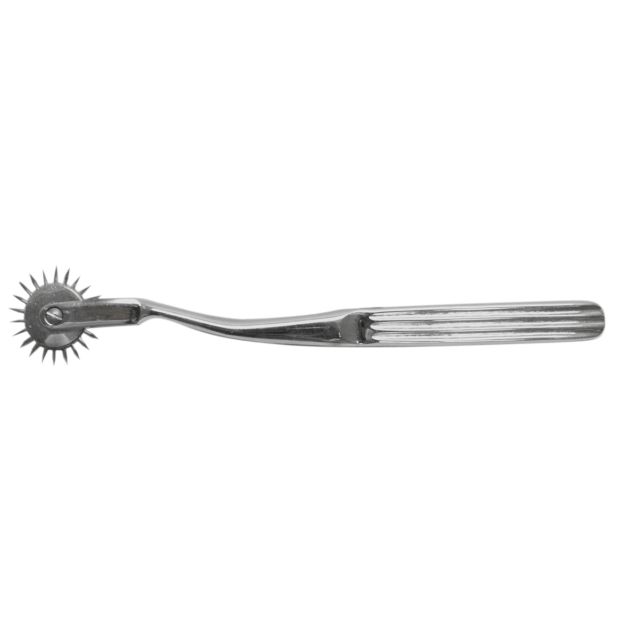
Wartenberg Neurological Pinwheel - Stainless Steel
Details Wartenberg Neurological Pinwheel - Stainless Steel
The Wartenberg Neurological Pinwheel is a precise diagnostic instrument for examining cutaneous sensibility and nerve function. This stainless steel wheel is used by physiotherapists, neurologists and rehabilitation specialists to test sensory responses and map nerve damage. Thanks to its autoclavable construction, the instrument is suitable for repeated use in both clinical settings and private practices.
Benefits of the Wartenberg Neurological Pinwheel
- Objective sensibility testing - accurately measures cutaneous sensory response via the rotating wheel with pins
- Fully autoclavable - stainless steel construction allows complete sterilisation for safe reuse
- Professional diagnostics - suitable for identifying nerve damage, neuropathies and sensory disorders
- Progress monitoring - ideal for objectifying recovery during rehabilitation and physiotherapy treatment
- Latex-free and safe - prevents allergic reactions and is suitable for all patients
- Hygienically packaged - each wheel is individually supplied in standard packaging
Who is the Wartenberg Neurological Pinwheel suitable for?
- Physiotherapists and manual therapists - for screening sensory function in neck, back and limb complaints
- Neurologists and neurosurgeons - for diagnosis of neuropathies, radiculopathies and nerve injuries
- Orthopaedic specialists - in identifying nerve involvement following trauma or in compression syndromes
- Rehabilitation centres and hospitals - for standard neurological screening and follow-up
- Sports physiotherapists - in assessing nerve function following sports injuries
- Training centres and educational institutions - for teaching neurological examination techniques
How does the neurological wheel work?
The Wartenberg Pinwheel tests cutaneous sensibility through gentle mechanical stimulation of the skin. The rotating wheel with sharp pins is rolled across the skin surface with uniform pressure, whilst you observe the patient's reaction. The patient indicates where they feel the stimulus, whether there are differences between body sides, and how sharp or dull the sensation feels.
This testing method makes it possible to map dermatome patterns, detect peripheral nerve damage and objectively monitor recovery of nerve function. The instrument is particularly valuable in differentiating between central and peripheral neurological conditions, and in establishing the severity and extent of sensory disorders.
Thanks to its autoclavable design, you can sterilise the wheel after each use according to standard sterilisation protocols, preventing cross-contamination and ensuring the instrument performs reliably for years.
Frequently asked questions about the Wartenberg Neurological Pinwheel
How do you sterilise the Wartenberg Pinwheel correctly?
The stainless steel wheel is fully autoclavable. First clean the instrument with a disinfecting solution, rinse it thoroughly and then place it in the autoclave according to standard sterilisation cycle (for example 134°C for 3 minutes). After sterilisation, check that the wheel still rotates smoothly and the pins are intact.
What is the difference between a Wartenberg wheel and other sensibility tests?
The Wartenberg Pinwheel specifically tests sharp-blunt discrimination and mechanical sensibility, whilst monofilaments measure pressure perception and two-point discrimination tests spatial resolution. The wheel is particularly suitable for quickly screening large skin areas and identifying dermatome patterns in radiculopathies.
Is the Wartenberg Pinwheel suitable for testing diabetic neuropathy?
Yes, the wheel can be used as part of a comprehensive sensory examination in diabetic polyneuropathy. It is particularly valuable for detecting distal sensory loss in the feet. Preferably combine the test with monofilament testing and vibration sense examination for a complete picture of nerve function.
How often should you replace a neurological wheel?
With normal use and proper maintenance, a stainless steel Wartenberg Pinwheel will last for years. Replace the instrument if the pins become blunt, the wheel no longer rotates smoothly, or if there is visible damage or corrosion. Regular inspection after sterilisation helps ensure quality.
Can you use the Wartenberg Pinwheel on open wounds or skin conditions?
Avoid direct contact with open wounds, active infections or severe skin conditions. In these cases, test sensibility on intact skin surrounding the affected area. In patients with very fragile skin (for example due to prolonged corticosteroid use), adjust the pressure to prevent skin damage.
What is the correct technique for using a neurological wheel?
Roll the wheel across the skin with light, uniform pressure in a smooth movement. Always compare symmetrical body areas (left-right) and move from proximal to distal on limbs. Ask the patient with eyes closed where they feel the stimulus and whether the sensation feels the same on both sides. Document any deviation in dermatome pattern for accurate follow-up.
Order your Wartenberg Neurological Pinwheel today and expand your diagnostic toolkit with this essential instrument for sensory examination. Do you have questions about its use or application? Our team of specialists would be happy to advise you.