
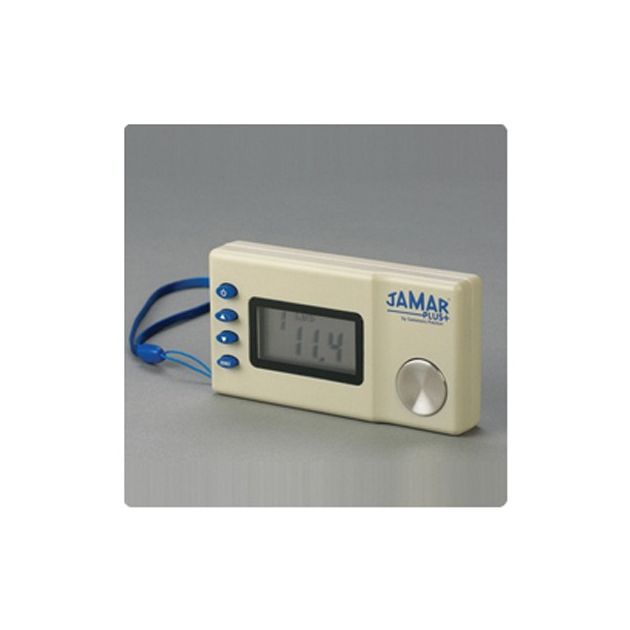
Jamar Plus+ Digital Hand Dynamometer - 50 lb
Details Jamar Plus+ Digital Hand Dynamometer - 50 lb
The Jamar Plus+ Digital Dynamometer is a professional measuring instrument that allows you to measure hand and finger grip strength objectively, accurately and repeatably. The device records three different grip types - tip grip, key grip and palmar grip - and stores up to 99 measurements, enabling you to closely monitor recovery progress. Thanks to the clear LCD display and maximum capacity of 50 lb, this instrument is suitable for use in physiotherapy practices, sports rehabilitation and home measurement by patients.
Benefits of the Jamar Plus+ Digital Dynamometer
- Accurate and repeatable measurements - objective data for monitoring recovery and strength development after hand injury or surgery
- Large memory capacity - store up to 99 measurements to compare progression or bilateral differences
- Measures three grip types - records tip, key and palmar grip for a complete functional picture
- Clear readable display - large LCD screen shows readings directly in pounds or kilograms
- User-friendly control panel - simple zeroing and storage with clear buttons
- Ready to use immediately - includes wrist strap and battery, no additional purchase needed
Who is the Jamar Plus+ Digital Dynamometer suitable for?
- Physiotherapists and hand therapists who want to perform objective grip strength measurements during hand rehabilitation, osteoarthritis or rheumatism
- Sports physiotherapists for baseline measurements and return-to-sport tests with wrist complaints or finger injuries
- Rehabilitation centres and hospitals that require standardisation and comparable data across multiple measurement moments
- Occupational experts and insurance medicine for determining functional capacity
- Athletes in recovery who want to independently monitor their grip strength at home during rehabilitation
- Elderly patients and chronically ill where sarcopenia, polyneuropathy or deconditioning requires early detection of strength loss
How does the Jamar Plus+ Digital Dynamometer work?
The Jamar Plus+ measures maximum isometric grip strength using an accurate digital sensor. You hold the device with your arm alongside your body and elbow in 90 degrees flexion, then squeeze maximally for approximately 3 seconds. The reading appears immediately on the LCD display and is automatically recorded.
The control panel has a zero button to clear the last stored measurement, plus two switches that allow you to easily navigate through the memory positions. This enables you to compare left and right, for example, or place measurements over several weeks side by side. The dynamometer switches between pounds (lb) and kilograms (kg) with a single button press, which is convenient for international use or when consulting reference values from different sources.
The Jamar standard is recognised worldwide as the gold standard for measuring grip strength and is used in much scientific research. This makes comparison with norm populations and literature simple and reliable.
What's in the box?
- Jamar Plus+ Digital Dynamometer (50 lb capacity)
- Wrist strap for safe use
- 3V battery (pre-installed)
Frequently asked questions about the Jamar Plus+ Digital Dynamometer
What is the difference between a digital and analogue Jamar dynamometer?
The digital version has an LCD screen that displays the reading directly in numbers, whilst the analogue version has a dial. The major advantage of the digital variant is the memory function: you can store up to 99 measurements and review them later, ideal for monitoring recovery. Additionally, the digital meter easily switches between pounds and kilograms, which the analogue meter cannot do.
How often should I measure grip strength during rehabilitation?
That depends on the phase and objective. In the early rehabilitation phase after surgery or trauma, you often measure weekly to pick up acute changes. In the later phase, once every two to four weeks suffices. For baseline measurements in athletes or occupational assessments, one reliable measurement per moment is sufficient, whereby you usually perform three repetitions and note the average or highest value.
Can I also measure children's grip strength with this meter?
Yes, the Jamar Plus+ is suitable for children from approximately 6 years old, depending on hand size. Please note that the capacity of 50 lb (approximately 23 kg) may be on the low side for adults, but is more than sufficient for children and adolescents. For very young children we recommend an adapted paediatric grip strength meter.
How do I interpret the readings and what are normal values?
Reference values for grip strength vary greatly by age, gender and dominant hand. On average, grip strength in adult men is between 40-50 kg and in women between 25-35 kg. A difference of more than 10-15% between both hands may indicate functional limitation. In practice, you always compare with the unaffected side or with previous measurements from the same patient. Many handbooks and articles provide age- and gender-specific reference tables that you can use as a guide.
Is the battery replaceable and how long does it last?
Yes, the 3V battery is replaceable. With normal use (a few measurements per day), the battery typically lasts 6 to 12 months. When the display becomes weaker or no longer responds, you simply replace the battery via the cover on the back. Always use a battery of the same type to continue guaranteeing reliable measurements.
Can I clean and disinfect the Jamar dynamometer?
Yes, you can wipe the outside of the device with a damp cloth and mild soap or an alcohol-based disinfectant wipe. Avoid moisture entering the electronics; never immerse the meter in water. For use in a clinical setting, we recommend wiping the handle and display after each patient to protect against cross-contamination.
Do you want to objectively monitor the grip strength of your patients or yourself? Order the Jamar Plus+ Digital Dynamometer today and benefit from reliable measurements and simple data collection. Do you have questions about the application or the best measurement protocol? Please feel free to contact us - we're happy to help you.