
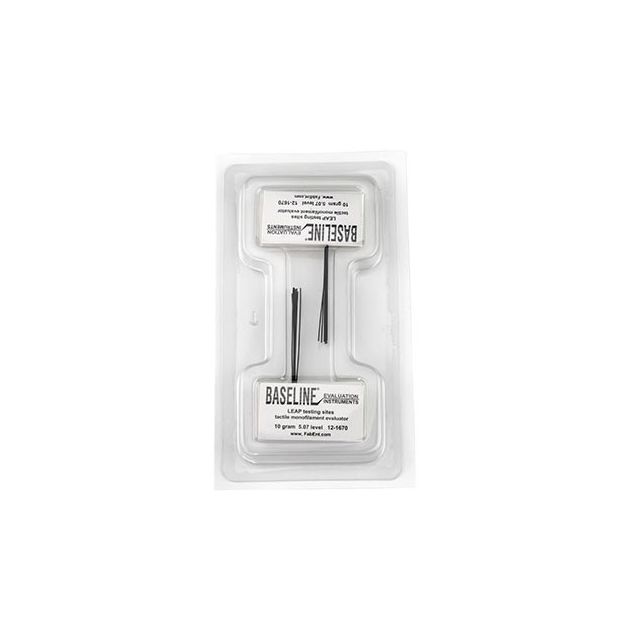
Baseline Monofilament 10 g - LEAP, Disposable (20 pcs)
Details Baseline Monofilament 10 g - LEAP, Disposable (20 pcs)
Baseline Tactile Monofilaments are professional screening instruments for early detection of loss of protective sensation and peripheral neuropathy. With a force of 5.07 / 10 gram, you reliably assess the neurological status of the foot in diabetic patients and other at-risk groups. Each monofilament is designed for single use, preventing cross-contamination. This value pack contains 20 individual monofilaments, complete with LEAP program test protocol and test locations.
Benefits of Baseline Tactile Monofilaments
- Hygienic and safe - disposable monofilaments prevent cross-contamination between patients, ideal for busy practices
- Standardised pressure - consistent application of 10 gram pressure for reliable and reproducible measurement results
- Evidence-based protocol - includes test protocol and test locations according to the recognised LEAP program (Lower Extremity Amputation Prevention)
- Early detection - identify timely changes in neurological status and prevent complications such as ulceration
- Practical format - each monofilament supplied with paper handle for easy handling and patient comfort
- Economical supply pack - 20 pieces in blister packaging, always sufficient stock in your practice
Who are Baseline Tactile Monofilaments suitable for?
- Diabetes nurses who regularly perform foot screening in diabetic patients
- Podotherapists and pedicurists who want to screen at-risk patients for neuropathy
- Physiotherapists in primary care treating patients with diabetic foot
- General practitioners and practice nurses delivering diabetes care according to clinical guidelines
- Hospitals and clinics with diabetes clinics or wound centres where hygiene is a priority
- Rehabilitation centres monitoring neurological function in various conditions
How does the monofilament work?
The tactile monofilament is a validated screening instrument for assessing protective sensation in the sole of the foot. The monofilament is placed perpendicular to the skin and slowly pressed until it bends. At this point, a pressure of exactly 10 gram is applied. When the patient does not feel this pressure at the prescribed test locations, there is reduced protective sensation, an important predictor for developing foot ulcers.
According to the LEAP program (Lower Extremity Amputation Prevention), specific test locations on the sole are assessed: on the plantar surface of the great toe, the first, third and fifth metatarsal heads. The included protocol describes exactly how to perform and interpret the test, including instructions for patient positioning and testing technique. By using the disposable version, you ensure that each monofilament maintains its original bending strength and you obtain reliable results with every patient.
Early detection of peripheral neuropathy enables you to take preventive measures, such as foot care education, footwear adjustment and more intensive monitoring. This can significantly reduce the risk of serious complications such as ulceration and amputation.
What's in the box?
- 20 disposable tactile monofilaments (5.07 / 10 gram)
- Each monofilament supplied with paper handle
- LEAP program test protocol and test locations
- Blister packaging for hygienic storage
Frequently asked questions about Baseline Tactile Monofilaments
Why disposable monofilaments instead of reusable ones?
Disposable monofilaments offer two important advantages. First, you ensure optimal hygiene as each monofilament is used with only one patient, essential in clinical settings. Second, disposable versions maintain their calibrated bending strength better: reusable monofilaments can show material fatigue over time, causing the applied pressure to deviate and measurement results to become less reliable. With disposable versions, you can be sure that each test is performed with a correctly calibrated instrument.
How often should I test a diabetic patient with the monofilament?
According to clinical guidelines and international recommendations, it is advised to screen diabetic patients at least once a year for peripheral neuropathy using the monofilament. In patients with increased risk (for example with already reduced sensation, previous ulcers or other risk factors), more frequent screening of two to four times per year is indicated. The test frequency should be tailored to the individual risk profile of the patient.
What does the value 5.07 / 10 gram mean exactly?
The value 5.07 refers to the logarithmic scale used with monofilaments (Semmes-Weinstein monofilament scale). The number 10 gram indicates the actual pressure applied when the monofilament bends. This 10 gram pressure is internationally validated as the threshold for detecting loss of protective sensation. Patients who cannot feel this pressure have significantly increased risk of developing foot ulcers and other complications.
Can I use the LEAP protocol in non-diabetic patients as well?
Yes, the monofilament and LEAP protocol are also valuable in other conditions where peripheral neuropathy can occur. Think of patients with polyneuropathy from other causes, such as chemotherapy-induced neuropathy, alcohol-related neuropathy or neurological conditions such as stroke or spinal cord injury. The instrument helps to objectively monitor changes in sensory function and thus tailor treatment and preventive measures to the current situation of the patient.
How should I store the monofilaments for optimal durability?
Store the blister pack at room temperature in a dry environment, away from direct sunlight and extreme temperatures. Remove a monofilament from the blister pack only just before use. The paper handle and nylon filament can lose their properties through moisture or temperature fluctuations. With proper storage, the monofilaments maintain their calibrated bending strength until the expiry date. Use each monofilament with only one patient and discard it afterwards.
Are these monofilaments suitable for home use by patients?
While it is technically possible for a patient to test themselves, we recommend having the screening performed by a trained healthcare professional. Correct testing procedure, appropriate test locations and interpretation of results require specific knowledge and experience. Additionally, it is difficult for the patient themselves to properly access and test the plantar surface of their own foot. The monofilaments are therefore primarily intended for professional use in healthcare.
Order Baseline Tactile Monofilaments now and ensure reliable screening for peripheral neuropathy in your practice. Do you have questions about application or would you like advice about other screening instruments? Feel free to contact us.